
skip to Main Content

Top 10 Solar Light Pole Manufacturers Worldwide

Solar street infrastructure is moving beyond isolated pilot projects. A solar light pole now combines photovoltaic panels, batteries, LED optics, controllers, and sometimes wireless monitoring. Its value depends on the complete system, not the panel alone. IRENA reported 1,419 GW of global solar photovoltaic capacity by the end of 2023. Solar also added about 346 GW that year, showing the technology’s expanding supply base (IRENA, Renewable Capacity Statistics 2024). The direction is clear. Yet, adoption does not guarantee reliable lighting.

The International Energy Agency expects solar PV and wind to provide about 95% of new renewable power capacity added through 2028 (IEA, Renewables 2024). This outlook supports stronger interest in off-grid and hybrid lighting solutions. However, a roadside installation faces harsh realities. Dust covers modules. Heat reduces battery performance. Heavy rain tests enclosure seals. Poorly sized batteries can leave a pathway dark before dawn. These details separate experienced manufacturers from attractive catalog claims.

This guide reviews the top 10 solar light pole manufacturers worldwide through practical criteria. The assessment considers product engineering, photovoltaic efficiency, battery chemistry, lighting distribution, smart controls, certifications, warranties, and documented projects. Manufacturer transparency also matters. A polished brochure is not field evidence. Public data remains uneven, and regional rankings can change quickly. No ranking is perfectly neutral. Buyers should verify photometric reports, salt-spray testing, wind-load calculations, replacement policies, and local service capacity. The strongest suppliers may not always be the largest. Some smaller specialists offer better customization for coastal roads, rural paths, campuses, and industrial sites. That difference deserves careful attention.
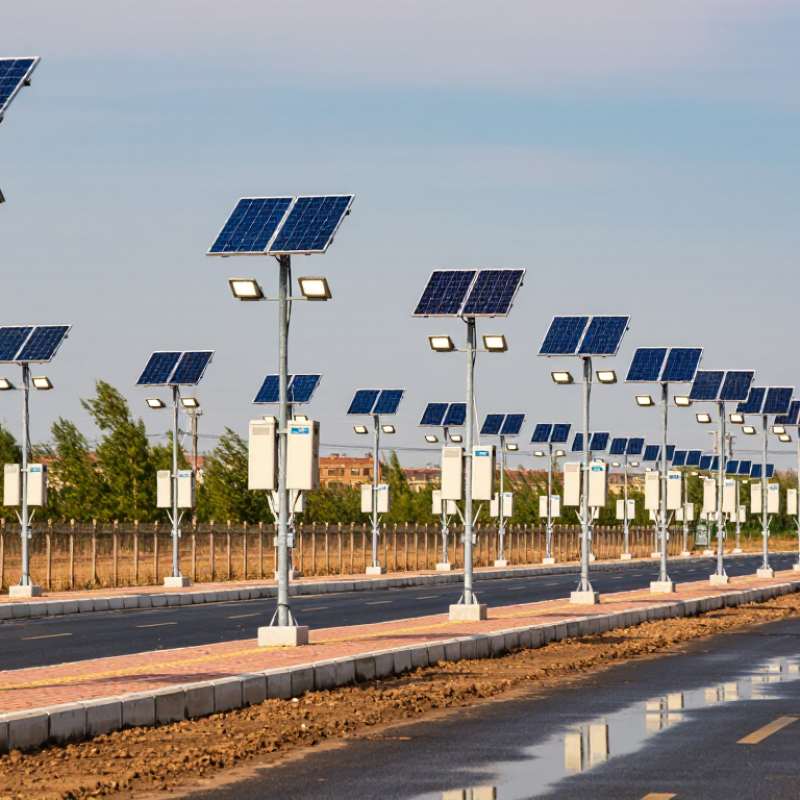
Top 10 Solar Light Pole Manufacturers Worldwide

Solar Light Pole Technology and Its Role in Modern Outdoor Lighting

Top 10 Solar Light Pole Manufacturers Worldwide

Solar light pole technology is reshaping outdoor lighting through energy independence, intelligent controls, and modular design. IRENA’s Renewable Capacity Statistics 2024 reported 1,419 GW of global solar capacity by the end of 2023. This growth supports more reliable photovoltaic components for streets, parks, campuses, and remote roads.

A well-engineered pole combines a high-efficiency solar panel, MPPT controller, lithium battery, LED module, and strong wind-resistant structure. Battery capacity must match local sunlight, temperature, and required autonomy. In field projects, cloudy weeks often reveal weak calculations. A bright first night proves little.

The U.S. Department of Energy’s Solid-State Lighting research identifies efficacy, controls, and product reliability as major development priorities. Adaptive dimming can reduce unnecessary output during quiet hours, while motion sensors can restore brightness when people approach. Designers should verify IP ratings, battery cycle life, lumen maintenance, and lighting uniformity, not only advertised wattage. The CIE 115:2010 guidance also reinforces the importance of appropriate road-lighting classes and visual comfort. Night exposes poor planning. Procurement teams should request test reports, photometric files, salt-spray results, and documented temperature performance. Some manufacturers still emphasize panel size over system efficiency, a mistake that can increase maintenance and shorten battery life.

Criteria for Ranking the Top Solar Light Pole Manufacturers Worldwide

Top 10 Solar Light Pole Manufacturers Worldwide

Ranking global solar light pole manufacturers requires more than comparing prices or panel wattage. The evaluation should begin with verified performance, product safety, and field experience. IRENA reported 345.5 GW of new solar capacity in 2023, showing how quickly solar technology is scaling. However, rapid growth does not guarantee reliable lighting equipment.

A credible ranking should examine battery cycle life, photovoltaic conversion efficiency, lighting uniformity, wind resistance, and protection against dust and water. Compliance with IEC 60598-1 and IEC 60598-2-3 provides a stronger technical baseline. Testing should also include night-time autonomy under cloudy conditions. That detail matters.

Manufacturers deserve higher positions when independent reports confirm long-term results. The IEA’s Renewables 2024 analysis identifies solar power as the main driver of renewable expansion, but it does not directly measure street-light durability.

Therefore, rankings should combine industry data with installation records, warranty claims, maintenance response, and replacement-part availability. A five-year field study is more meaningful than a bright showroom demonstration.

Supply-chain resilience also matters. The World Bank’s Commodity Markets Outlook highlights continuing volatility in material prices, especially for metals used in energy equipment. Manufacturers with transparent sourcing and stable production deserve closer attention. Yet no ranking is flawless. Reported efficiency may decline in heat, dust, or weak sunlight, and published data can omit these conditions. Real streets are less forgiving.

Profiles of the Ten Leading Solar Light Pole Manufacturers

The ten leading solar light pole manufacturers worldwide reflect different strengths in design, production, and project delivery. Some focus on integrated poles with panels, batteries, controllers, and LED fixtures. Others specialize in customized structures for highways, parks, campuses, and remote roads. Their profiles should be judged by tested performance, not attractive product images.

Experienced manufacturers usually provide wind-load calculations, battery-cycle data, photometric files, and installation guidance. Strong engineering teams also explain how products perform during cloudy periods and winter nights. Production quality matters too. Inspectors should check welding points, galvanized coatings, cable protection, and battery enclosures. A missed detail can shorten service life. That still happens.

Tips: Compare warranty terms, not only prices. Ask for independent test reports and recent project references. Confirm replacement-part availability before ordering. Review pole height, foundation design, lighting duration, and local weather conditions together. A ten-hour lighting claim may depend on ideal sunlight, clean panels, and moderate temperatures. Real projects are less predictable. Manufacturers that openly discuss these limits often appear more reliable than suppliers promising perfect results.

Top 10 Solar Light Pole Manufacturers Worldwide

Profiles of the Ten Leading Solar Light Pole Manufacturers

This chart presents representative product specifications commonly offered by leading global solar light pole manufacturers. The benchmark ranges cover LED power, pole height, battery autonomy, photovoltaic panel capacity, and standard warranty periods. Actual specifications vary by project requirements, climate, lighting class, and local regulations.

Global Manufacturing Regions, Markets, and Product Differences

Top 10 Solar Light Pole Manufacturers Worldwide: Global Manufacturing Regions, Markets, and Product Differences

Solar light pole manufacturing is concentrated in East Asia, South Asia, Europe, and North America. Each region responds to different infrastructure needs, climates, and purchasing standards. East Asian factories often provide broad customization, competitive pricing, and high-volume production. South Asian manufacturers commonly design for village roads, campuses, and solar-powered public projects. European producers usually emphasize refined optics, lower visual impact, and strict testing documentation. North American suppliers often focus on rugged poles, remote monitoring, and municipal specifications.

Product differences become clearer in real installations.

A coastal highway needs powder-coated aluminum or galvanized steel, sealed battery compartments, and strong wind resistance. A dry inland road may prioritize battery capacity and dust protection. Monocrystalline panels usually support compact designs, while lithium iron phosphate batteries offer stable cycling and practical service life. Some systems include motion sensors, dimming schedules, and cloud-based monitoring.

Useful features.

Market expectations can still be misunderstood.

A low purchase price may hide weaker batteries, limited spare parts, or difficult replacement work. Field inspections should examine pole thickness, anchor-bolt quality, cable routing, and nighttime illumination. Relevant electrical and lighting standards matter, but paperwork alone cannot prove long-term performance. A ranking of the top ten manufacturers may therefore change by region, project scale, and maintenance capacity.

No factory leads every category. That is worth remembering.

How to Compare Solar Light Pole Suppliers for Different Projects

Comparing solar light pole suppliers requires more than scanning a worldwide top-ten list. Project conditions should guide the shortlist. A coastal road needs corrosion-resistant poles, sealed electronics, and a suitable wind-load rating. A rural pathway may need lower output but stronger battery autonomy during cloudy weeks.

Ask each supplier for measurable evidence. Request photometric files, battery capacity, panel specifications, and test reports. Check the claimed lighting level at ground height, not only the lamp’s wattage. Confirm protection ratings, operating temperatures, and expected battery replacement intervals. A supplier with clear drawings and traceable component data is easier to assess. Vague promises are costly.

Installation experience matters too. Review foundation designs, cable layouts, pole dimensions, and delivery packaging. Ask whether local technicians can service controllers and batteries. Warranty terms deserve close reading; some exclude performance loss, transport, or labor. That detail can change the real project price. A factory visit or video inspection may reveal assembly quality, but it cannot replace independent testing.

Do not trust a perfect spreadsheet.

Suppliers sometimes present ideal autonomy figures based on new batteries and bright weather. Recalculate using local solar data, winter shading, dust, and temperature. I would also compare five-year ownership costs, not just purchase prices. A cheaper pole may require earlier battery replacement or frequent cleaning. One practical weakness remains: supplier documents may not reflect field conditions. Small pilot installations can expose that gap before hundreds of poles are ordered.

Article Source:

Back To Top