skip to Main Content

How to Choose the Right Lift Equipment Rental?

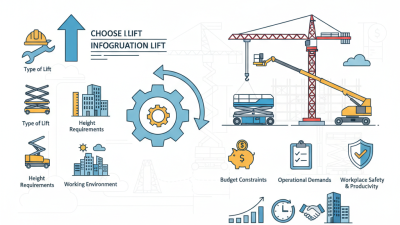
Choosing the right lift equipment rental is more than comparing daily prices. It is a practical decision involving height, reach, load, ground conditions, access width, and working duration. A machine that looks suitable online may fail beside a narrow doorway or soft construction surface.

Peter Douglas, former CEO of the International Powered Access Federation (IPAF), has emphasized, “Safety is at the heart of everything we do.” That principle should guide every rental choice. The equipment must match the task, not merely the budget. A compact electric scissor lift may suit a smooth indoor floor, while a rough-terrain boom lift may better handle uneven ground and overhead obstacles.

Measure the work area carefully. Record the platform height, required outreach, worker numbers, tools, and combined load. Check door dimensions, turning space, slope, floor strength, and nearby power lines. Small details matter.

Very small details.

Ask the rental provider about inspection records, maintenance history, operator training, delivery procedures, and emergency support. A reputable supplier should explain controls clearly and identify limitations without hiding behind technical language. Experience helps, but it does not remove risk.

The lowest quote is not always the lowest cost. Transport delays, unsuitable tires, limited battery life, and poor maneuverability can quickly increase expenses. That part is easy to underestimate. It deserves a second look.

This guide explains how to compare lift equipment rental options with greater confidence. It also considers practical site conditions, supplier reliability, equipment suitability, and safe operating expectations. Some choices will remain imperfect. Good planning simply makes those imperfections visible before the machine arrives.

How to Choose the Right Lift Equipment Rental?

Define the Job: Height, Outreach, Load, Terrain, and Duty Cycle

How to Choose the Right Lift Equipment Rental?

Define the Job: Height, Outreach, Load, Terrain, and Duty Cycle

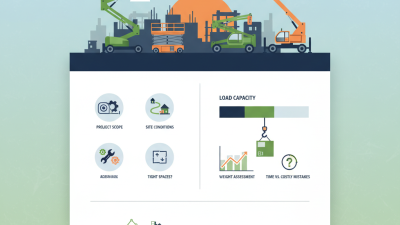
Choosing suitable lift equipment starts with the worksite, not the rental catalogue. Write down the required platform height and working height separately. A six-meter roofline may need more than six meters of working height. The operator’s reach and safety clearance also matter. Measure horizontal outreach from the firm ground position to the farthest work point. Height alone misleads.

List every item carried aloft, including tools, materials, and workers. Check the total load against the equipment’s rated capacity. Uneven weight can affect stability. I have seen small toolboxes become an overlooked load issue. Keep the figures honest. Estimate the heaviest realistic condition, not the average one.

Inspect the terrain before requesting a quote. Note slopes, gravel, soft soil, narrow gates, overhead obstructions, and indoor floor limits. A compact unit may fit the entrance but struggle on wet ground. Consider the duty cycle too. Occasional lamp replacement differs from eight-hour installation work. Frequent repositioning may require a different power source and operating design. Ask about charging, refueling, and access time. These details often decide productivity.

Leave room for uncertainty. Site measurements can be incomplete, especially around hidden edges or changing ground conditions. Recheck them with a competent site supervisor. Review the operating manual, load chart, inspection records, and required training before delivery. I once underestimated setup space by less than a meter. That mistake delayed the work and changed the rental choice.

Match the Lift to ANSI A92 MEWP and OSHA 1926.453 Requirements

Choosing the right lift begins with the worksite, not the rental yard. Identify the required platform height, horizontal reach, load capacity, and ground conditions. Consider door widths, overhead obstructions, slopes, and nearby electrical hazards. A compact lift may suit a finished interior, while rough terrain may require larger tires and stronger stabilization.

ANSI A92 MEWP standards emphasize safe design, operator responsibilities, inspections, training, and proper use. Confirm that the equipment matches the applicable ANSI A92 requirements and the project’s rental documentation. OSHA 1926.453 also addresses aerial lift safeguards, including guardrails, controls, brakes, and safe operating practices. The operator needs documented training for the specific equipment category. Read the manual before starting.

Do not choose by maximum height alone. That shortcut fails. Check the rated capacity after adding workers, tools, and materials. Review the manufacturer’s instructions for wind limits, slope limits, outriggers, and travel controls. A pre-use inspection should identify damaged tires, leaking hydraulics, faulty alarms, or missing guardrail components. Plan how an elevated worker will be lowered during an emergency. Even experienced crews can overlook rescue access or changing ground conditions. Recheck the site after rain, deliveries, or structural changes. When rental staff cannot explain inspection records or operating limits clearly, pause the selection and ask for competent guidance.

How to Choose the Right Lift Equipment Rental? — Match the Lift to ANSI A92 MEWP and OSHA 1926.453 Requirements
Use this comparison to match the work area, reach, capacity, surface conditions, and applicable safety requirements before selecting a rental lift. Dimensions and capacities are typical rental ranges; always verify the specific unit’s data plate, operator manual, and site conditions.
Lift Type Typical ANSI A92 MEWP Classification Typical Platform Height Typical Working Height Typical Rated Capacity Reach and Movement Best-Fit Applications Surface and Site Conditions Key OSHA and Safety Checks
Vertical Mast Lift
Compact Indoor
Usually Group A; commonly Type 3 when drive controls are located on the platform. Confirm the exact unit classification. Approximately 10–30 ft Approximately 16–36 ft Approximately 300–750 lb Primarily vertical movement with little or no horizontal outreach. Narrow chassis models may fit through standard doors and aisles. Indoor maintenance, lighting, electrical work, inventory access, warehouse tasks, and finished-floor work. Best on level, firm floors. Check doorway width, floor loading, overhead obstructions, aisle clearance, and indoor ventilation requirements. Complete a pre-use inspection and function test. Maintain guardrails and a closed entry gate. Follow the manufacturer’s travel, charging, and surface-slope limits. If the configuration meets the OSHA aerial-lift definition, apply the applicable requirements of 29 CFR 1926.453.
Electric Slab Scissor Lift
Large Platform Low Emission
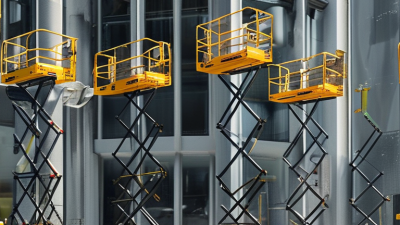
Usually Group A; commonly Type 3 for drive-and-steer functions from the elevated platform. Approximately 15–40 ft Approximately 21–46 ft Approximately 500–1,250 lb Vertical elevation with a broad platform. Limited or no outreach beyond the chassis footprint. Indoor installation, ductwork, sprinklers, ceiling systems, painting, electrical work, and facilities maintenance. Requires a firm, level slab. Check floor capacity, slab openings, ramps, drop-offs, overhead hazards, and aisle width. Do not use outdoors unless the unit is specifically rated for outdoor conditions and wind exposure. Scissor lifts are generally treated as mobile scaffolds rather than aerial lifts under OSHA interpretations; apply the relevant scaffold provisions, including 29 CFR 1926.451, where applicable. Use guardrails, inspect before each shift, and do not use ladders or planks on the platform to gain additional height.
Rough-Terrain Scissor Lift
Outdoor Uneven Ground
Usually Group A; often Type 3. The exact group and type depend on the machine’s platform movement and travel controls. Approximately 20–53 ft Approximately 27–60 ft Approximately 800–2,000 lb Vertical elevation with a large work platform. Some models include a limited deck extension but do not provide boom-style outreach. Exterior framing, mechanical installation, masonry support, structural work, and construction tasks requiring multiple workers or materials. Select only when the ground is compacted and capable of supporting the machine. Check slope, mud, ruts, trenches, excavations, outriggers or stabilizers, and overhead obstructions. Use the manufacturer’s limits for slope, platform loading, wind, and stabilizer deployment. Maintain guardrails and gate protection. Apply site-specific fall-protection procedures and keep the platform clear of unauthorized height-increasing devices.
Articulating Boom Lift
Outreach Obstacles
Usually Group B; commonly Type 3 when travel is controlled from the platform. Verify the unit’s ANSI A92 classification. Approximately 30–120 ft Approximately 36–126 ft Approximately 300–800 lb Multi-directional outreach over and around obstacles. Articulated joints allow positioning above equipment, structures, and other obstructions. Steel erection support, building maintenance, industrial access, tree work, sign installation, and work requiring elevated horizontal positioning. Check ground bearing capacity, counterweight clearance, swing radius, overhead structures, traffic, wind, and the possibility of entrapment between the platform and nearby objects. OSHA 29 CFR 1926.453 requirements generally apply to aerial lifts of this type. Test controls before each shift, keep brakes and outriggers or stabilizers properly set, use the required personal fall-protection system attached to the designated anchor, and never exceed the rated platform capacity.
Telescopic Boom Lift
Long Reach High Elevation
Usually Group B; commonly Type 3. Exact classification depends on travel and platform-control functions. Approximately 40–185 ft Approximately 46–191 ft Approximately 500–1,000 lb Long, mostly straight-line horizontal outreach with high elevation capability. Less effective than an articulating boom where obstacles must be cleared from multiple directions. Exterior steel and concrete work, high-bay maintenance, façade access, roofing support, utilities, and large construction sites. Requires careful assessment of wind, ground bearing, slope, swing radius, transport routes, overhead lines, and the manufacturer’s required setback from edges and excavations. Apply 29 CFR 1926.453 aerial-lift controls and fall-protection requirements. Maintain the minimum required clearance from energized overhead lines, keep the boom within operating limits, and never use the boom as a crane or material-handling device unless specifically designed and approved for that purpose.
Compact Crawler or Tracked Boom Lift
Restricted Access Low Ground Pressure
Usually Group B; often Type 1 or Type 3, depending on whether travel is permitted only when stowed or also when elevated. Approximately 35–100 ft Approximately 41–107 ft Approximately 440–660 lb Articulating or telescopic outreach with a narrow footprint. Some units can pass through doors or gates that cannot accommodate conventional boom lifts. Atriums, courtyards, landscaping, historic buildings, indoor maintenance, and sites with restricted access. Confirm floor protection, point loading, track clearance, setup space, stabilizer footprint, slope, and access over thresholds or ramps. Protect delicate finished surfaces where required. Apply the applicable aerial-lift requirements of 29 CFR 1926.453, including pre-use control testing, guardrail use, personal fall protection, and electrical-clearance controls. Follow the manufacturer’s setup sequence for stabilizers and leveling systems.
Important regulatory scope: ANSI A92.20, A92.22, and A92.24 provide current design, safe-use, and training frameworks for mobile elevating work platforms (MEWPs). OSHA 29 CFR 1926.453 specifically addresses aerial lifts and does not automatically classify every scissor lift as an aerial lift. Determine the equipment category, apply the applicable OSHA construction requirements, and follow the current manufacturer’s instructions and the rental company’s inspection procedures.
Rental selection checklist:
  • Choose platform height and outreach based on the actual work position, not only the building height.
  • Confirm the combined weight of workers, tools, equipment, and materials is below the rated platform capacity.
  • Check ground conditions, slope, floor loading, wheel or track clearance, and stabilizer requirements before delivery.
  • Identify overhead power lines, structures, pipes, beams, traffic, and crush or entanglement hazards.
  • Verify operator training and familiarization for the specific MEWP category and controls before use.
  • Complete the required pre-use inspection, function test, emergency-lowering check, and documentation before each shift.
  • For energized overhead lines up to 50 kV, maintain at least 10 ft (3.05 m) of clearance unless a compliant alternative safety method is established; greater voltages require greater clearance.
  • Do not rely on this table as a substitute for the specific unit’s data plate, operator manual, site risk assessment, or competent-person determination.

Verify Rated Capacity, Platform Size, Slope Limits, and Load Charts

How to Choose the Right Lift Equipment Rental?

Rated capacity is the first number I check, but it is not the whole decision. Add workers, tools, materials, and personal equipment before comparing the total with the machine’s rated capacity. Never treat the maximum figure as a comfortable target. A lift working near its limit may respond poorly during movement or positioning. I once underestimated the weight of wet materials, which changed the calculation more than expected.

Platform size also affects safety and productivity. Measure the working area, not just the item being installed. Leave enough room for controlled movement without leaning over guardrails. A crowded platform encourages awkward handling. It can also shift the load unexpectedly. Check the platform’s distributed-load and point-load limits in the rental documents.

Slope limits deserve careful attention. A machine may travel across a surface but still require level ground while elevated. Inspect the route for ramps, soft soil, drainage channels, and hidden edges. Use the manufacturer’s stated slope limits and follow the site’s risk assessment. Load charts can reveal restrictions that casual inspection misses, including reduced capacity at certain outreach positions or platform configurations. Read the chart for the exact setup, not a similar-looking model. Ask the rental provider to explain unclear symbols or footnotes. My own mistake was assuming one chart applied to every attachment; it did not. Recheck the figures before loading, especially when conditions change.

Compare Rental Costs: Daily Rates, Delivery, Fuel, and Damage Fees

Choosing the right lift equipment rental starts with the complete cost, not the advertised daily rate. A low rate can become expensive after delivery, fuel, cleaning, and damage fees. Ask for an itemized quote before reserving the equipment. Confirm the rental period, included operating hours, overtime charges, and extension policy. A one-day rental may still require two-way transport.

Delivery costs depend on distance, access, and equipment size. Check whether unloading requires a suitable truck or special site preparation. Fuel policies also vary. Some companies charge refueling fees, while others require the tank returned at the same level. Photograph the fuel gauge and equipment condition during pickup. Small details matter.

Damage fees deserve careful attention. Read the waiver terms, exclusions, deductible, and reporting deadline. Normal wear should be defined clearly. Hidden responsibility can create expensive disputes. I once underestimated delivery time and paid for an extra rental day. That mistake changed how I compare quotes. Now, I calculate the daily rate, transport, fuel, taxes, and possible idle time together. I also inspect tires, controls, guardrails, and alarms with the operator before signing. A written checklist is more reliable than memory, especially on a busy jobsite.

Confirm Safety Readiness: 10-Foot Clearance and Trained Operators

How to Choose the Right Lift Equipment Rental?

Confirm Safety Readiness: 10-Foot Clearance and Trained Operators

Before choosing a lift rental, inspect the work area as carefully as the machine. Measure overhead clearance, doorway height, floor strength, and nearby obstructions. Keep at least 10 feet from energized overhead power lines, unless local requirements demand more. Confirm the distance with the site supervisor and utility authority when needed. A small measuring error can create a serious hazard.

The operator should have documented training for the specific lift type. Experience with one machine does not automatically qualify someone for another. Ask the rental provider about operating instructions, load limits, emergency lowering, and inspection records. Review the controls before entering the work zone. Check tires, guardrails, alarms, hydraulics, and visible damage. Do not accept vague answers.

Use a spotter in tight areas, especially near beams, pipes, doors, or changing pedestrian routes. Mark the 10-foot boundary with visible barriers or warning signs. Keep the platform level, respect the rated load, and never improvise with extra boards or ladders. I have seen rushed crews focus on reach while overlooking soft ground beneath the wheels. That mistake is easy to repeat. A short pause for a second measurement may feel unnecessary, but it often exposes the risk that the first inspection missed.
Back To Top