
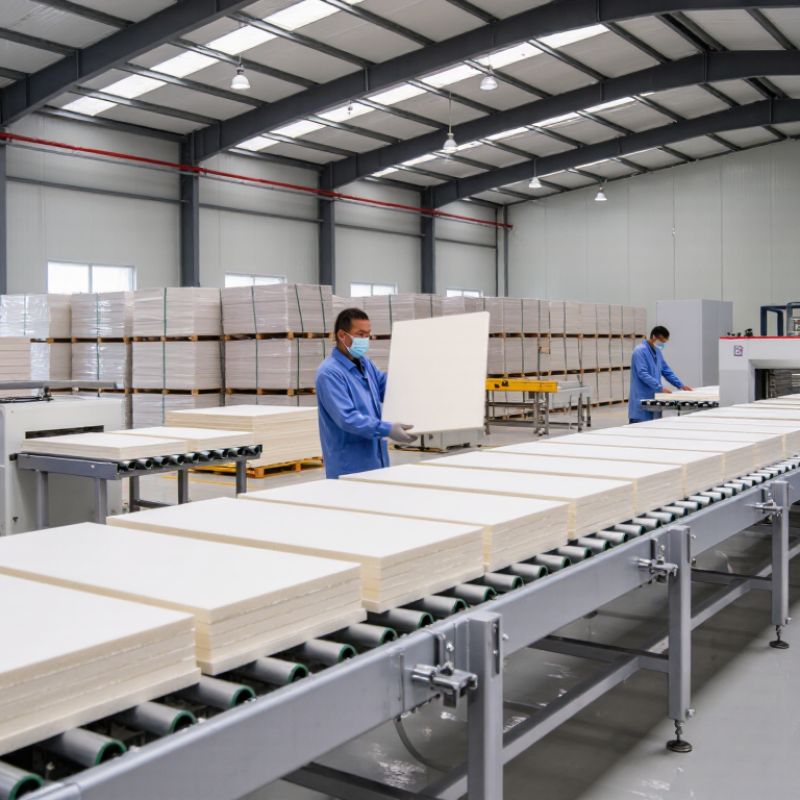
China Top Non-Aging Foam Sandwich Panel Supplier?
Non-aging foam sandwich panels combine two protective skins with an insulating foam core. The core is commonly made from polyurethane, polyisocyanurate, or expanded polystyrene. “Non-aging” does not mean unlimited service life. It means the panel maintains thermal resistance, shape, and bonding performance within specified conditions. The phrase is useful, but not precise.
A reliable panel should show closed-cell structure, low water absorption, stable density, and controlled thermal conductivity. EN 13165 and EN 13163 provide relevant performance frameworks for rigid polyurethane and expanded polystyrene insulation.
Testing should also examine dimensional stability, fire reaction, compressive strength, and skin adhesion. Small defects matter. A crushed edge can create a cold bridge.
The International Energy Agency reports that buildings consume about 30% of global final energy. Better envelope insulation therefore has practical value, especially in cold storage, factories, and modular buildings.
Grand View Research has also identified steady growth in the global sandwich panel market, supported by energy-efficiency requirements and faster construction. However, laboratory results may not match field performance. Joint sealing, sunlight, humidity, and installation quality can reduce service life. Supplier evaluation should include test reports, batch records, core density, and project references. Ask for aging data, not only an attractive thermal-conductivity number.