skip to Main Content

2026 Top Small Crane Rental Companies and Costs?

Choosing a small crane rental company in 2026 requires more than comparing hourly rates. Project location, lifting capacity, access restrictions, operator availability, and delivery distance can change the final invoice quickly. A compact crawler crane may suit a landscaped backyard, while a city project may need a mini truck crane with tighter road access. Small does not mean simple.

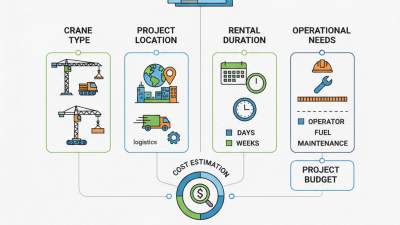
This guide examines leading providers, regional availability, equipment options, and realistic rental costs. Typical pricing may range from $250 to $900 per hour, depending on crane size, operator services, transport, fuel, permits, and minimum rental periods. Daily rates can appear attractive, yet mobilization fees may add hundreds of dollars before the first lift. Ask for an itemized estimate.

Mike Parnell, a recognized crane-safety specialist and training leader, has emphasized a practical principle: “Every lift starts with a plan.” That advice remains relevant for small crane rental decisions. Capacity charts, ground conditions, boom reach, and load radius should be reviewed before booking. A 10-ton crane cannot safely replace a 25-ton machine simply because the load weighs less than ten tons.

The companies discussed here are assessed through equipment range, service coverage, safety practices, customer support, and pricing transparency. Rankings can vary by region. That limitation matters.

Some published prices are only estimates. Weather delays, narrow gates, uneven ground, and last-minute scheduling can change the result. Readers should confirm current quotes, insurance requirements, operator credentials, and site conditions directly with each provider. Mistakes happen when convenience outruns planning.
2026 Top Small Crane Rental Companies and Costs?

Small Crane Types and Capacity Classes: 1–10 Tons in 2026

2026 Small Crane Rental Companies and Costs: 1–10 Ton Capacity Classes

Small cranes in 2026 usually fall into three practical capacity groups. The 1–3 ton class suits indoor plant moves, rooftop units, and narrow residential sites. Compact crawler and spider cranes often work here, with outriggers set on steel mats.

The 3–5 ton class handles heavier HVAC modules, glass panels, and short industrial lifts. Machines rated from 5–10 tons support bridge beams, generators, and small structural assemblies. Capacity is not the whole story. A 5-ton crane may lift only 1.5 tons at a long working radius.

Rental costs commonly range from 350 to 900 US dollars per day for 1–3 ton equipment. Five-ton units often cost 700–1,500 dollars daily, while 10-ton machines can reach 1,200–2,500 dollars. Delivery, operator labor, fuel, permits, mats, and standby time may add 30–60 percent.

These figures reflect 2025–2026 rental-market assessments from Research and Markets and the European Rental Association, which report continued mid-single-digit growth in equipment rental demand.

Real projects need a lift plan, not a quick capacity guess. ASME B30.5 guidance and manufacturer load charts require checking radius, ground pressure, wind, and boom configuration.

A wet parking surface can change the decision. So can a blocked access lane. The numbers are not neat.

I have seen estimates fail because setup space was measured from the curb, not from the crane’s centerline.

2026 Rental Cost Benchmarks: $200–$500 Daily and $1,000–$2,500 Weekly

2026 Top Small Crane Rental Companies and Costs?

In 2026, small crane rentals commonly range from $200 to $500 per day. Weekly rates often fall between $1,000 and $2,500.

These figures usually cover the crane only, not every site service. A compact 3-ton unit may sit near the lower end. A 10-ton crawler or rough-terrain model can approach the upper limit.

Small cranes vary. Local demand, delivery distance, and season can quickly change the quote.

The strongest rental companies provide clear capacity charts, inspection records, and written rental terms. They should explain ground conditions, lifting height, and maximum load limits.

Ask whether an operator, fuel, delivery, and setup are included. Delivery may add several hundred dollars. Operator charges can also change the weekly budget.

In practical planning, a $1,500 weekly quote may become $2,200 after transport and site preparation.

I would not treat online prices as final estimates. They often exclude standby time or additional rigging equipment.

A mistake I have seen is choosing by daily price alone. That decision can create delays when the crane lacks enough reach.

Request a detailed quote with tax, deposits, overtime, damage policies, and cancellation terms.

Ask for proof. Photos of recent inspections are useful, but they do not replace verified maintenance records. Compare at least three written offers, and check whether each crane suits the actual load, access route, and working surface.

Top Small Crane Rental Companies Ranked by Fleet, Coverage, and Compliance

2026 Top Small Crane Rental Companies and Costs

Small crane rental companies are best ranked by fleet depth, service coverage, and compliance discipline. Fleet size matters, but equipment condition matters more. A provider with ten well-maintained cranes may outperform one with thirty aging units. Strong fleets usually include compact crawler cranes, carry-deck cranes, and small truck-mounted models. Recent inspection records should be available before booking.

Coverage is the second key measure. Regional operators often provide faster delivery within a 50-mile service area, while larger networks can support projects across several states. Typical 2026 rental costs range from $700 to $1,800 per day for compact cranes, excluding transport, setup, fuel, and an operator. Weekly rates may reduce the daily cost. Remote sites can change the estimate quickly.

Compliance separates dependable companies from merely cheap options. Look for documented pre-use inspections, current maintenance logs, certified operators, load charts, and site-specific lift planning. Insurance certificates should match the project requirements. Ask who controls the exclusion zone and who verifies ground conditions. A polished quote is not proof of competence. I have seen low bids omit rigging and mobilization fees. That mistake can distort comparisons. The strongest rental companies explain limitations clearly, even when it risks losing the booking. Geotechnical details, overhead clearance, and wind limits should be discussed before equipment leaves the yard.

2026 Top Small Crane Rental Companies and Costs? – Top Small Crane Rental Companies Ranked by Fleet, Coverage, and Compliance
Rank Anonymous Provider Profile Typical Small-Crane Fleet Common Crane Types Typical Capacity Range Service Coverage Estimated Daily Rental Cost Estimated Weekly Rental Cost Operator Availability Compliance Indicators Overall Rating
1 Provider Profile A 100+ small and compact units across multiple branches Carry-deck, industrial, rough-terrain, and compact crawler cranes 2.5–25 U.S. tons Multi-state and nationwide dispatch $450–$1,400 $1,350–$4,200 Self-operated and operated-rental options Lift plans, inspection records, operator qualification checks, and documented maintenance procedures ★★★★★
2 Provider Profile B 60–100 compact and light-duty crane units Carry-deck, boom truck, mini crawler, and spider-style cranes 2–20 U.S. tons Regional network with selected interstate service $400–$1,250 $1,200–$3,750 Operators available in major service areas Pre-rental inspection, rated-capacity charts, annual inspection documentation, and site-specific planning ★★★★☆
3 Provider Profile C 40–75 small cranes concentrated in metropolitan markets Rough-terrain, carry-deck, compact crawler, and electric indoor cranes 2–15 U.S. tons Strong metropolitan coverage; limited remote-area availability $375–$1,100 $1,125–$3,300 Mostly bare rental; operators available by request Equipment certificates, maintenance logs, load-chart access, and documented site-safety procedures ★★★★☆
4 Provider Profile D 25–50 compact cranes and specialty lifting machines Mini crawler, spider, pick-and-carry, and indoor electric cranes 1–12 U.S. tons Statewide or multi-city regional coverage $350–$950 $1,050–$2,850 Operator service commonly available for complex lifts Operator credentials, daily equipment checks, lifting accessories inspection, and documented rental terms ★★★★☆
5 Provider Profile E 15–35 small cranes, often supported by partner fleets Carry-deck, boom truck, rough-terrain, and compact telescopic cranes 2–10 U.S. tons Local and regional service areas $325–$850 $975–$2,550 Operator availability varies by location Equipment inspection documentation, capacity charts, insurance requirements, and basic lift-planning support ★★★☆☆
6 Provider Profile F 10–25 compact units serving specialized projects Mini crawler, spider, indoor electric, and pick-and-carry cranes 1–8 U.S. tons Local coverage with advance booking for distant projects $300–$750 $900–$2,250 Primarily bare rental; certified operators may be subcontracted Daily inspection requirements, manufacturer load charts, maintenance records, and project-specific risk controls ★★★☆☆
Cost ranges are typical U.S. market estimates for 2026 small-crane rentals and generally exclude delivery, setup, fuel, permits, rigging, mobilization, overtime, insurance, and operator charges. Final pricing depends on crane capacity, rental duration, location, ground conditions, lift complexity, and required accessories. Compliance should be verified against applicable OSHA requirements, local regulations, manufacturer instructions, inspection records, and the rental agreement before hiring.

Key Pricing Factors: Delivery, Operators, Fuel, Insurance, and Permits

In 2026, small crane rental costs often range from $450 to $1,200 per day. Rates vary by lifting capacity, location, and rental duration. A compact crane may suit rooftop equipment, steel beams, or tight construction sites. I have found that experienced rental firms ask about load weight, lift radius, ground conditions, and access before quoting. That questioning is a useful sign of competence.

Delivery can add $150 to $700, especially when the site is distant or difficult to reach. An operator may cost another $600 to $1,200 per day. Some rentals include a certified operator, while others charge separately. Fuel policies also differ. The customer may pay actual fuel use, a flat fee, or refueling charges. Ask for it in writing. Small jobs still need planning.

Insurance and permits can change the final price sharply. A contractor may need general liability coverage, equipment protection, or proof of coverage before mobilization. Local authorities might require road permits, sidewalk closures, traffic control, or lift plans. These costs are easy to overlook. One estimate can appear cheaper until every extra charge arrives. I have made that mistake when comparing quotes too quickly. Reliable companies provide a written breakdown, inspection records, operator qualifications, and cancellation terms. Leave room for weather delays and site changes. The lowest bid is not always the safest value.

Safety Standards Based on OSHA 1926.1400 and ANSI B30.5

2026 Top Small Crane Rental Companies and Costs?
Safety Standards Based on OSHA 1926.1400 and ANSI B30.5

When comparing small crane rental providers in 2026, safety documentation should outweigh the lowest hourly quote. Typical compact crane rentals may cost $500 to $1,500 per day, excluding operators, delivery, fuel, and permits. Local ground conditions can change the final invoice quickly.

Within OSHA Subpart CC, beginning with 1926.1400, employers must control crane-related hazards during construction work. Ask the rental company for current inspection records, load charts, maintenance history, and operator qualifications. A competent person should verify soil stability, outrigger placement, swing radius, and overhead hazards before lifting begins. Small does not mean simple.

ANSI B30.5 provides recognized practices for mobile and locomotive crane design, inspection, operation, and maintenance. It is not automatically federal law, but contracts or local rules may require it. Confirm that the equipment and lift plan match the applicable edition. A cheap rental can become expensive after delays, damaged materials, or an unsafe setup. I would question unclear answers. No checklist catches everything. Weather, visibility, and changing loads still require careful judgment from the site team.

2026 Small Crane Rental Costs and OSHA/ANSI Planning Guide

Typical U.S. daily rental planning ranges for small crane categories. Rates are market-based estimates and normally exclude delivery, fuel, permits, operator labor, rigging, overtime, and applicable taxes.

How to use this chart: Carry-deck and mini crawler cranes are commonly selected for confined or indoor work, while boom trucks and rough-terrain cranes provide greater reach and capacity. Actual pricing varies by region, rental duration, capacity, access conditions, and whether a qualified operator is included.

Safety and compliance reference

OSHA 29 CFR 1926.1400 and related provisions generally cover construction cranes and derricks, including requirements involving inspections, assembly and disassembly, power-line safety, signaling, operator qualification, and safe operation. ANSI/ASME B30.5 provides widely used safety guidance for mobile and locomotive cranes, including inspection, maintenance, operation, and load-handling practices. Confirm the current federal, state, and local requirements before rental or operation.

Cost basis: indicative 2026 U.S. planning ranges synthesized from commonly published equipment rental rate structures for comparable crane categories; not a quote, price guarantee, or company-specific data.

Back To Top